
Delhi Protest News, October 12, 2026: Dhruv Rathee, Abhijeet Dipke and 10 Major Developments
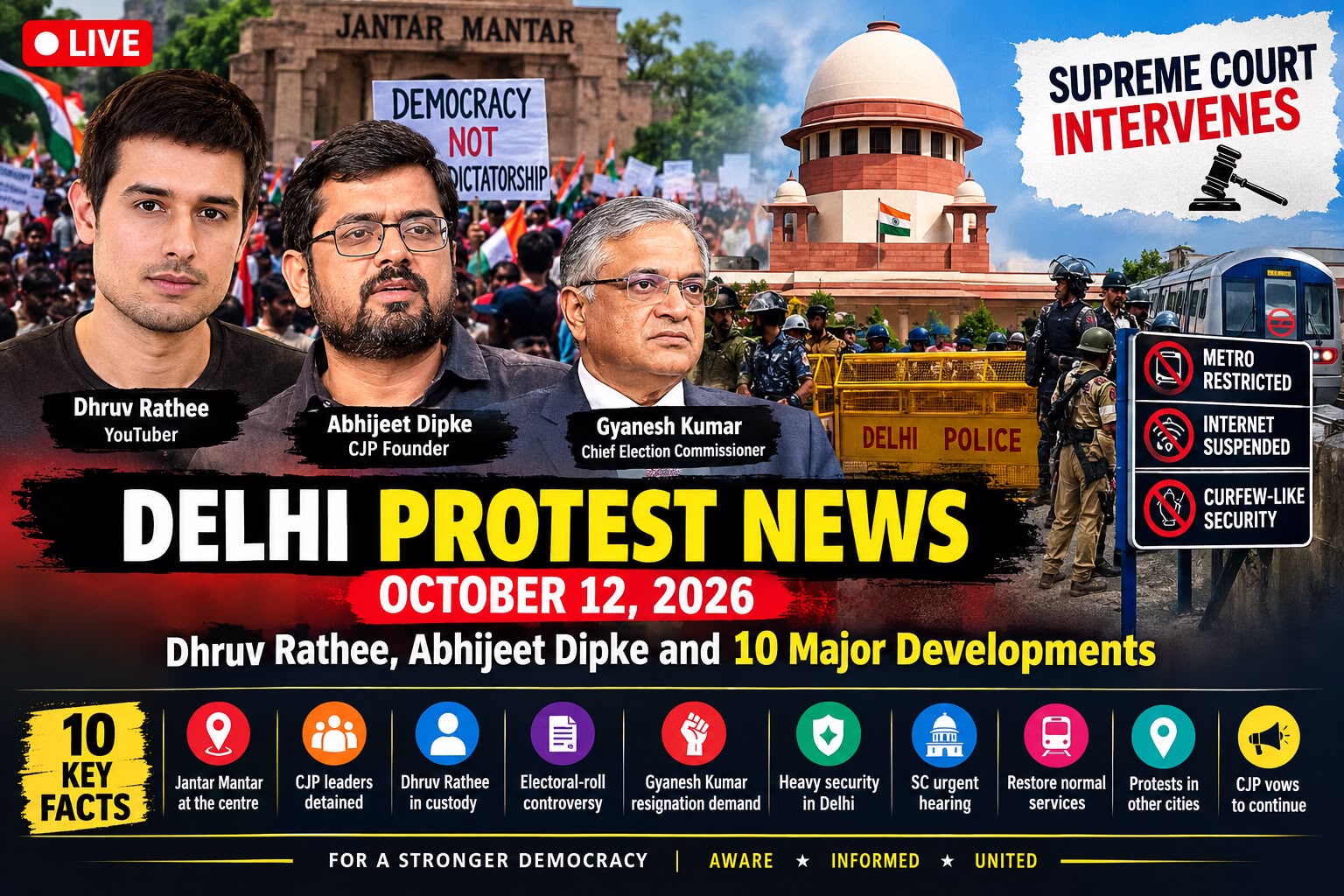
Delhi Protest News, October 12, 2026: Dhruv Rathee, Abhijeet Dipke and 10 Major Developments
Delhi Protest News, October 12, 2026: Dhruv Rathee, Abhijeet Dipke and 10 Major Developments
10 Major Facts About the Delhi Protest
Jantar Mantar Became the Centre of the Demonstration
The CJP called for a large gathering in New Delhi under its protest campaign. Organizers wanted to draw attention to electoral-roll revisions and demand accountability from election authorities. Police restrictions prevented the planned demonstration from proceeding as originally intended.
Abhijeet Dipke and Other CJP Leaders Were Detained
Their detention became a central issue in the dispute, with supporters demanding their release and criticizing the authorities’ actions. The three leaders were subsequently released on October 11.
Dhruv Rathee’s Detention Attracted National Attention
YouTuber Dhruv Rathee was also reported detained ahead of the planned demonstration. His involvement brought additional public attention to the incident because of his large online audience. LiveMint reported on October 11 that Rathee had been released from detention.
Electoral-Roll Revisions Sparked the Protest
The demonstration centred on objections to changes in voter lists and allegations that the revisions could unfairly exclude eligible voters. Critics demanded greater transparency and questioned the potential political consequences. The Election Commission has denied allegations of partisan manipulation, while authorities have said the verification process removed duplicate, deceased, relocated or otherwise unverifiable entries.
Protesters Demanded Gyanesh Kumar’s Resignation
A principal demand was the resignation of Chief Election Commissioner Gyanesh Kumar. Demonstrators argued that the controversy surrounding voter-list revisions required greater accountability. The dispute remains politically contentious, with opposition groups raising concerns and the Election Commission rejecting allegations of wrongdoing.
Heavy Security Measures Disrupted Delhi
Authorities deployed substantial security personnel and introduced restrictions affecting movement around central Delhi. Metro access was restricted at several stations, railway services were affected, and mobile internet was suspended in parts of the capital.
The Supreme Court Held an Urgent Hearing
The Supreme Court convened a special hearing on October 11 after applications raised concerns about transport restrictions and alleged unlawful detentions. The court addressed the need to protect peaceful assembly and ensure that lawyers and journalists could perform their professional duties without obstruction. It also issued notice concerning a plea alleging non-compliance with earlier directions.
Authorities Were Asked to Restore Normal Services
During the hearing, the court addressed the restoration of normal metro operations and internet connectivity, subject to applicable law-and-order requirements. It also emphasized that peaceful participants must not be detained unlawfully. The proceedings placed the legality and proportionality of the restrictions under judicial scrutiny.
Protests Spread Beyond the Capital
Demonstrations and solidarity gatherings were also reported in cities including Mumbai, Kolkata, Panaji and Pune. The developments demonstrated that the controversy had attracted attention beyond the original gathering planned for Jantar Mantar.
CJP Leaders Vowed to Continue Their Campaign
After their release, CJP leaders indicated that they intended to continue protesting. Abhijeet Dipke publicly stated that the movement would return to the streets.
Conclusion
The Delhi protests of October 10–11, 2026, brought electoral transparency, police powers and peaceful assembly into the national spotlight. The reported detention of Dhruv Rathee and Abhijeet Dipke, the release of CJP leaders and the Supreme Court’s intervention became major developments in the unfolding controversy.
The central issue remains the balance between maintaining public order and protecting democratic freedoms. Allegations concerning voter-list revisions and the conduct of the authorities must be assessed through verified evidence, official responses and the ongoing legal process.
Delhi Protest News, October 12, 2026: Dhruv Rathee, Abhijeet Dipke and 10 Major Developments


https://youtube.com/sirbikramsutradhar
Delhi Protest News, October 12, 2026: Dhruv Rathee, Abhijeet Dipke and 10 Major Developments