
Upcoming Cars in India 2026–2027: SUVs, EVs & Prices
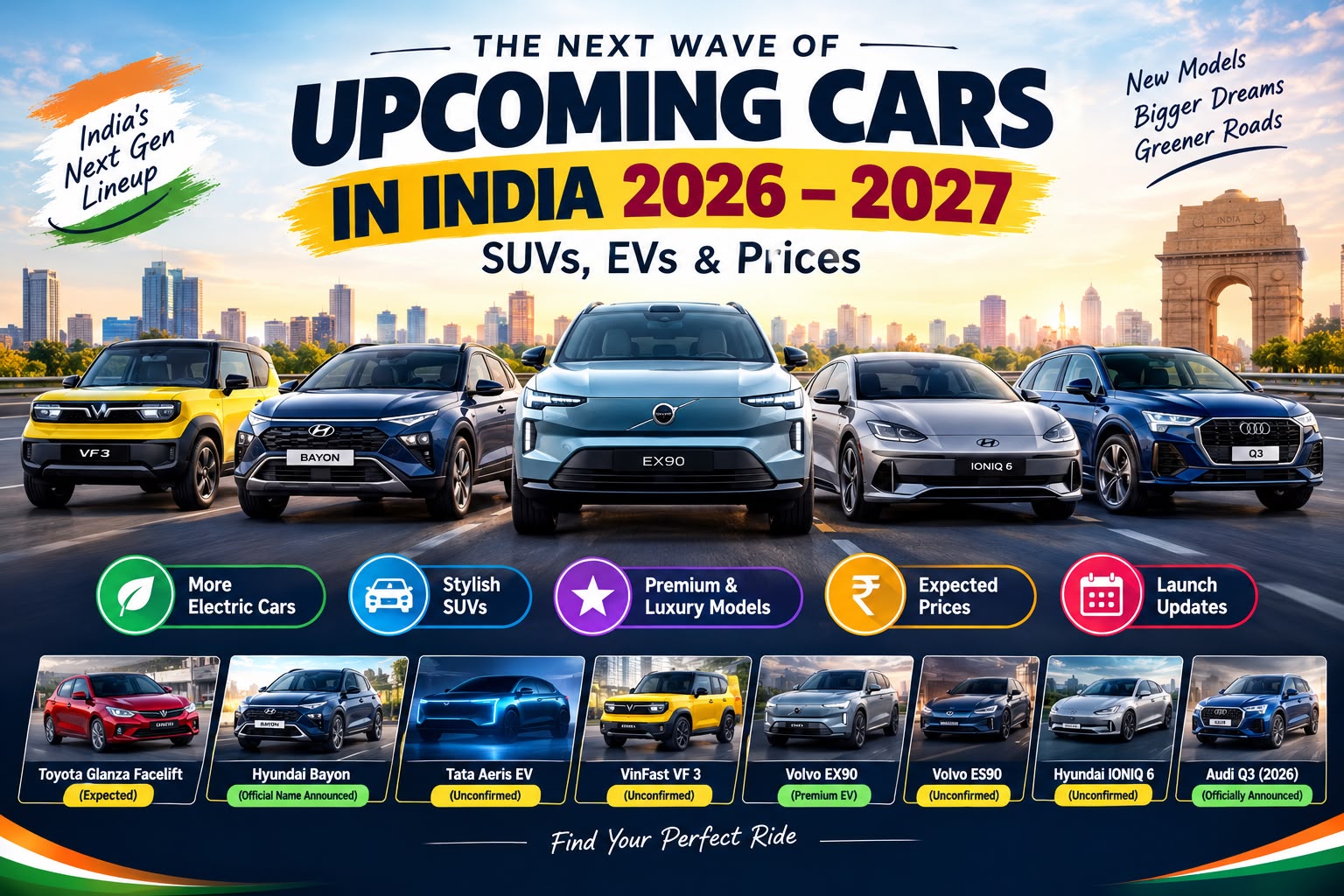
Upcoming Cars in India 2026–2027: SUVs, EVs & Prices
Upcoming Cars in India 2026–2027: New SUVs, EVs and Luxury Models to Watch
From practical city cars to premium electric vehicles, India’s next wave of automotive launches could offer buyers more choices across budgets, body styles and powertrain technologies.
India’s car market is entering an interesting period. Buyers looking for their next vehicle are increasingly comparing more than just engine power and showroom prices. Running costs, cabin technology, safety equipment, charging access and long-term ownership expenses are becoming important parts of the decision.
Against this backdrop, several manufacturers are preparing new products or expanding their existing portfolios. Compact SUVs remain important for urban families, while electric vehicles are attracting attention from buyers who want an alternative to conventional petrol-powered cars. Premium brands are also exploring opportunities in the luxury electric segment.
This guide examines eight models that have appeared in upcoming-car discussions for India. It explains what each vehicle could offer, which buyers might find it interesting, and what information still needs official confirmation.
Why the Next Round of Car Launches Matters
A new vehicle does not have to introduce an entirely new technology to be worth considering. A well-executed facelift can improve everyday usability through better displays, additional safety equipment or more convenient cabin features.
New electric vehicles present a different set of questions. Buyers need to look beyond the advertised driving range and consider charging speed, battery warranty, home-charging arrangements and the availability of service facilities. These factors can influence the ownership experience as much as the vehicle’s headline specifications.
1. Compact and Budget-Friendly Cars
Smaller cars and compact crossovers are especially relevant to buyers who spend much of their time in city traffic. Manageable dimensions, practical storage, efficient powertrains and reasonable maintenance costs can matter more than outright performance in this category.
Toyota Glanza Facelift
The Glanza already occupies a familiar position in India’s premium hatchback segment. A future refresh could be an option for buyers who prefer a conventional petrol car with a compact footprint and everyday practicality.
What could change?
If Toyota introduces a facelift, possible areas of improvement could include exterior detailing, cabin finishes, infotainment software and convenience equipment. These are possibilities, not confirmed specifications for an upcoming model.
Who should watch it?
First-time car buyers, small families and commuters who want a hatchback rather than a larger SUV.
Official reference: Toyota Glanza model information
Hyundai BAYON
Hyundai has officially introduced the BAYON name for an upcoming addition to its Indian SUV range. The model deserves attention from buyers looking for a modern crossover-style vehicle.
Its final Indian-market appeal will depend on the dimensions, engine choices, equipment, pricing and positioning Hyundai confirms for local customers.
What buyers should check
- Rear-seat space and family practicality
- Engine performance in everyday traffic
- Safety equipment across variants
- Infotainment and connected-car features
- Final introductory price and delivery schedule
Official reference: Hyundai BAYON India
Tata Aeris EV
The Tata Aeris EV name has circulated in upcoming-car discussions, but a dependable official confirmation of a production vehicle under this name was not established for this guide.
Buyers interested in Tata’s future electric-car plans should distinguish confirmed products and official announcements from speculative model names circulating online.
What matters for a small EV?
- Usable battery capacity
- Real-world city driving range
- Home and public charging compatibility
- Battery warranty and service support
- Purchase price after applicable incentives
Official reference: Tata Motors
VinFast VF 3
The VF 3 is a small electric vehicle with a distinctive upright shape and a compact overall footprint. Its design makes it an interesting model to watch for customers who want an EV primarily for urban travel.
VinFast showcased the VF 3 alongside other vehicles during its India-market activities. However, a showcase alone should not be treated as confirmation of a retail launch date or price.
Potential appeal
A compact electric car could suit short commutes, tight parking spaces and routine city errands. Final practicality would depend on its Indian specification, passenger space, range and charging support.
Official reference: VinFast India
2. Premium SUVs and Electric Cars
The premium end of the market presents a different proposition. Buyers in this segment may prioritise refinement, advanced driver-assistance technology, long-distance comfort and the experience of owning an electric vehicle with substantial performance.
Volvo EX90
The EX90 is Volvo’s large, fully electric SUV. Its international proposition centres on family space, a premium cabin and a technology-led approach to vehicle safety.
Features and seating configurations can vary between markets and versions. Indian buyers should check the actual specification offered locally rather than assuming that every international feature will be included.
What deserves attention?
- Passenger space and seating layout
- Battery range and charging performance
- Driver-assistance equipment
- Warranty and after-sales arrangements
- Final on-road price and delivery availability
Official reference: Volvo EX90
Volvo ES90
The ES90 is an all-electric premium sedan designed around a spacious cabin, modern digital systems and long-distance comfort. Its low-slung body gives it a different character from a large SUV.
For prospective buyers, the most relevant details will be the locally offered battery configuration, charging capability, rear-seat comfort and the complete ownership package.
Why consider a luxury electric sedan?
A sedan may suit buyers who prefer a more traditional executive-car profile, a quiet electric drivetrain and a comfort-focused driving experience.
Indian availability, pricing and equipment should be checked with Volvo before making a purchase decision.
Official reference: Volvo Cars India
Hyundai IONIQ 6
The IONIQ 6 is Hyundai’s streamlined electric sedan, developed around an aerodynamic design and an electric-vehicle architecture. Its shape distinguishes it from the more upright SUVs that dominate many markets.
The model is worth following for buyers interested in premium EV design, rapid charging technology and an alternative to a conventional luxury sedan.
Details to look for
- Indian launch confirmation
- Battery and motor specifications
- Certified range under the applicable test cycle
- Charging compatibility and speed
- Local service and warranty coverage
Official reference: Hyundai Motor India
Audi Q3 (2026)
Audi has announced the all-new Q3 for India and reported the commencement of local assembly in September 2026. This makes it one of the more concrete premium models to monitor in the current launch cycle.
The Q3 targets buyers who want a compact luxury SUV with premium cabin materials, contemporary infotainment and an elevated driving position.
What should buyers compare?
- Engine and transmission specifications
- Cabin technology and practical storage
- Safety and driver-assistance features
- Variant-wise equipment
- Warranty, service costs and final pricing
Official references: Audi India announcements | Audi Q3 model page
3. Expected Prices and Launch Timelines
The table below brings together preliminary estimates associated with these models. These figures are intended for initial research, not as confirmed manufacturer prices or guaranteed delivery dates.
| Model | Indicative Price | Launch Status | Powertrain |
|---|---|---|---|
| Toyota Glanza facelift | Not confirmed | Facelift timing unconfirmed | Petrol / CNG on the current model; future specification unconfirmed |
| Hyundai BAYON | Not confirmed | Official name announced; check latest launch updates | Indian specification to be verified |
| Tata Aeris EV | Not confirmed | Production model under this name not verified | Unconfirmed |
| VinFast VF 3 | Not confirmed | Indian retail launch to be verified | Electric |
| Volvo EX90 | Check official India pricing | Verify local availability | Electric |
| Volvo ES90 | Check official India pricing | Verify local availability | Electric |
| Hyundai IONIQ 6 | Not confirmed for India | Indian availability to be verified | Electric |
| Audi Q3 (2026) | Check official variant-wise pricing | Official India announcements available | Refer to Indian-market specification |
4. Buying an Electric Car? Check These Details First
A lower advertised running cost can make an electric vehicle attractive, but the best choice depends on your regular travel pattern and charging arrangements. Before paying a booking amount, compare the following points.
EV buyer’s checklist
- Real-world range: Compare realistic daily usage rather than relying exclusively on the highest advertised figure.
- Home charging: Confirm whether a suitable parking space and electrical installation are available.
- Public charging: Identify reliable charging locations along your regular routes and longer journeys.
- Battery warranty: Read the coverage period, distance limit and conditions carefully.
- Charging time: Check the charging power supported by the exact variant you intend to purchase.
- After-sales support: Ask about nearby service facilities, parts availability and roadside assistance.
- Total ownership cost: Compare purchase price, insurance, electricity, maintenance and depreciation.
5. Should You Buy Now or Wait for a New Car?
Waiting for an upcoming model can make sense if your current vehicle meets your needs and the new car promises a meaningful improvement. However, waiting indefinitely for an unconfirmed launch can also delay a purchase without delivering a clear advantage.
Consider buying now if:
- Your existing vehicle no longer meets your daily needs.
- You have found a model that fits your budget and usage.
- A current offer provides meaningful overall value.
- The vehicle is available with the features you need.
Consider waiting if:
- An official launch announcement is already available.
- The new model addresses a specific shortcoming of your current choice.
- You want to compare an incoming EV with existing alternatives.
- You can comfortably delay the purchase until prices and specifications are published.
The most useful comparison is not simply between an existing model and a newer one. Compare the complete ownership proposition: what you pay, what you receive, how you will use the vehicle and what it may cost to maintain over several years.
Frequently Asked Questions
Which upcoming cars in India should buyers watch in 2026?
Models attracting attention include the Hyundai BAYON, the new Audi Q3 and several premium electric vehicles. The Toyota Glanza facelift and VinFast VF 3 also appear in upcoming-car discussions, but their Indian launch details should be checked before making plans.
What is the expected price of the Hyundai BAYON in India?
A reliable final price should not be assumed until Hyundai publishes official Indian-market pricing. Any earlier estimate should be treated as provisional and may differ from the eventual showroom and on-road prices.
Is the VinFast VF 3 confirmed for an Indian launch?
VinFast has showcased the VF 3 in connection with its India-market activities. However, that does not establish a confirmed retail launch date, Indian specification or final price. Check the company’s official India website for the latest announcement.
Is the Tata Aeris EV an officially confirmed production car?
This guide could not establish dependable official confirmation of a production Tata vehicle under the name Aeris EV. Readers should verify the model name through Tata Motors’ official announcements before treating it as an upcoming product.
Are expected car prices the same as on-road prices?
No. An expected price may be an estimate or an anticipated ex-showroom figure. The on-road price can include registration, insurance, applicable taxes and other charges. Ask an authorised dealer for a detailed quotation.
What should I check before booking a new electric car?
Check the exact battery specification, certified and real-world range, charging compatibility, warranty conditions, service coverage and final price. Also confirm the expected delivery date and the terms under which a booking deposit can be refunded.
Final Verdict: Which Upcoming Car Deserves Your Attention?
India’s next wave of car launches offers something for several types of buyers, from people seeking compact everyday transport to customers interested in premium electric mobility.
The Hyundai BAYON is worth following for its new position in Hyundai’s Indian SUV portfolio, while the Audi Q3 is relevant to buyers shopping in the compact luxury SUV category. Volvo’s electric models appeal to a different audience, with a focus on premium comfort and battery-powered driving.
For budget-conscious buyers, the sensible approach is to wait for verified prices and specifications rather than making a decision based on rumours. A confirmed launch date, a realistic ownership budget and a suitable test drive are more valuable than an attractive but unverified headline figure.
Our advice: shortlist the cars that fit your needs first, then compare their confirmed specifications and total ownership costs.
Official Sources and Further Reading
Manufacturer websites are the preferred starting point for confirming product availability, specifications and prices.