

Class 6 Science Chapter 2: Diversity in the Living World Hindi & English medium prepared under the name of Grandmaster Bikram Sutradhar (5-Time World Record Holder) for the BASTRONAUTWAY initiative 🌟 🏆: Best Teacher Award Winner 2023

Class 6 Science Chapter 2: Diversity in the Living World Hindi & English medium prepared under the name of Grandmaster Bikram Sutradhar (5-Time World Record Holder) for the BASTRONAUTWAY initiative 🌟 🏆: Best Teacher Award Winner 2023
🌱 Chapter 2: Diversity in the Living World
📘 Class 6 Book: Curiosity
👨🏫 Prepared by: Grandmaster Bikram Sutradhar (5-Time World Record Holder) – Best Teacher Award Winner 2023
✨ BASTRONAUTWAY Initiative
🧠 Welcome to the Amazing World of Living Things! 🌍
Have you ever noticed how different plants and animals are around you? 🌳🐦
कुछ पेड़ बहुत ऊँचे होते हैं जैसे बरगद 🌳, और कुछ बहुत छोटे जैसे घास 🌿।
जानवरों की दुनिया भी उतनी ही विविध है — जैसे रंग-बिरंगा मोर 🦚 और शांत मछली 🐟।
इस अध्याय में हम जानेंगे कि जीवन की विविधता क्यों महत्वपूर्ण है, जीव कैसे अनुकूलित होते हैं, और हमें इसे क्यों संरक्षित करना चाहिए। 💚
📘 Exam-Related Questions (परीक्षा संबंधित प्रश्न)

✅ Multiple Choice Questions (MCQs) [1 Mark Each]
(बहुविकल्पीय प्रश्न – 1 अंक)
- 🐾 What does biodiversity mean?
जैव विविधता का क्या अर्थ है?
a) Only trees 🌲
b) Variety of living things 🌱
c) Only water 💧
d) Only rocks 🪨
✅ Answer: b) Variety of living things 🌱 - 🌿 Which plant has parallel venation?
किस पौधे में समांतर शिरा विन्यास होता है?
a) Hibiscus 🌺
b) Grass 🌾
c) Neem 🌳
d) Rose 🌹
✅ Answer: b) Grass 🌾 - 🐟 What body part helps a fish move in water?
मछली को पानी में चलने में कौन सा अंग मदद करता है?
a) Legs 🦵
b) Wings 🕊️
c) Fins 🐠
d) Humps 🐫
✅ Answer: c) Fins 🐠 - 🐫 Which of these is an adaptation of a desert camel?
इनमें से कौन एक रेगिस्तानी ऊँट का अनुकूलन है?
a) Thick fur 🧥
b) One hump for food storage 🐫
c) Streamlined body 🏊
d) Waxy leaves 🍃
✅ Answer: b) One hump for food storage 🐫 - 🏞️ What happens if habitats are damaged?
यदि आवास नष्ट हो जाएं तो क्या होता है?
a) More plants grow 🌿
b) Loss of biodiversity 🐾
c) Animals get stronger 🐘
d) Water stays clean 💧
✅ Answer: b) Loss of biodiversity 🐾
✍️ Very Short Answer (VSA) [1 Mark Each]
(अति लघु उत्तर – 1 अंक)
- 🍅 Name one herb mentioned in the chapter.
अध्याय में उल्लिखित एक जड़ी-बूटी का नाम बताइए।
✅ Answer: Tomato 🍅 - 🍁 What is reticulate venation?
जालदार शिरा विन्यास क्या है?
✅ Answer: Reticulate venation is a net-like pattern of veins in leaves. / यह पत्तियों में जाल-जैसा नसों का पैटर्न होता है। - 🐸 Name one animal that lives in both water and land.
एक ऐसा जानवर बताइए जो जल और स्थल दोनों में रहता है।
✅ Answer: Frog 🐸 - 🌲 What is the habitat of a deodar tree?
देवदार वृक्ष का प्राकृतिक आवास क्या है?
✅ Answer: Mountains ⛰️ / पहाड़ - 🌳 Who helped save the Silent Valley forest?
साइलेंट वैली जंगल को बचाने में किसने मदद की?
✅ Answer: Janaki Ammal and common people 👩🔬👨🌾

📝 Short Answer (SA) [2-3 Marks Each]
(लघु उत्तर – 2-3 अंक)
- 🌿 Describe how plants are grouped into herbs, shrubs, and trees based on their stems.
पौधों को उनकी तनों के आधार पर जड़ी-बूटी, झाड़ी और पेड़ कैसे वर्गीकृत किए जाते हैं?
✅ Answer:- Herbs (जड़ी-बूटियाँ): Soft and green stems (e.g., tomato 🍅)
- Shrubs (झाड़ियाँ): Hard, woody stems close to the ground (e.g., rose 🌹)
- Trees (पेड़): Tall, thick woody stems (e.g., mango आम)
- 🌱 Explain the difference between taproots and fibrous roots with examples.
मुख्य जड़ और रेशेदार जड़ों के बीच अंतर समझाइए।
✅ Answer:- Taproot (मुख्य जड़): Thick main root with side roots (e.g., hibiscus 🌺)
- Fibrous roots (रेशेदार जड़ें): Many thin roots (e.g., grass 🌾)
- 🐫 How do camels adapt to survive in the desert?
ऊँट रेगिस्तान में जीवित रहने के लिए कैसे अनुकूलित होता है?
✅ Answer:- One or two humps for fat storage
- Wide hooves for sand
- Thick lashes to protect from sand
- Conserves water by excreting less urine
- 🌍 Why is biodiversity important? Give one example of its protection.
जैव विविधता क्यों महत्वपूर्ण है? इसका संरक्षण का एक उदाहरण दीजिए।
✅ Answer:- Provides food, medicine, oxygen
- Keeps balance in nature
- Example: Silent Valley was saved from a dam project 🌳💧
- 🐾 List two ways to group animals based on their features.
जानवरों को उनकी विशेषताओं के आधार पर वर्गीकृत करने के दो तरीके बताइए।
✅ Answer:- Based on movement: flyers (pigeon), swimmers (fish)
- Based on habitat: terrestrial (goat), aquatic (whale)
📖 Long Answer (LA) [5 Marks Each]
(दीर्घ उत्तर – 5 अंक)
- 🪴 Explain the process of grouping plants by height, stem nature, and leaf venation with examples.
पौधों को ऊँचाई, तने की प्रकृति और पत्ती के शिरा विन्यास के आधार पर कैसे वर्गीकृत किया जाता है?
✅ Answer:- Height & Stem:
- Herbs: short, soft stems (e.g., tomato 🍅)
- Shrubs: medium, hard stems (e.g., rose 🌹)
- Trees: tall, woody stems (e.g., mango 🥭)
- Leaf Venation:
- Monocots: parallel venation (e.g., grass 🌾)
- Dicots: reticulate venation (e.g., hibiscus 🌺)
- Height & Stem:
- 🌿 Describe how plants and animals adapt to their habitats with examples.
पौधे और जानवर अपने आवासों के अनुसार कैसे अनुकूलित होते हैं?
✅ Answer:- Deserts: Camels with humps, cactus storing water
- Mountains: Deodar with conical shape, yaks with thick fur
- Oceans: Fish with fins and streamlined bodies
- 🌏 Discuss the importance of habitats and the consequences of their destruction. Suggest two ways to protect biodiversity.
आवासों का महत्व और उनके विनाश के परिणाम बताइए। जैव विविधता की रक्षा के दो तरीके सुझाइए।
✅ Answer:- Importance: Homes for plants & animals, provide food, water, oxygen
- Destruction Effects: Loss of biodiversity, extinction of species (e.g., Bengal tiger)
- Protection Ways:
- Tree plantation 🌳
- Conservation projects like Project Tiger 🐅
📚 Notes for Students
📌 Difficulty Levels:
- MCQs, VSA: Easy 😊
- SA: Medium 😌
- LA: Challenging but scoring 💪
📌 Key Themes Covered:
- Biodiversity
- Grouping of plants & animals
- Adaptations
- Habitats
- Conservation
📌 Learning Tip:
Observe plants and animals during nature walks 🐾, make notes, and connect with real life! 🌱
🖊️ Prepared by: Grandmaster Bikram Sutradhar
🏆 5-Time World Record Holder | Best Teacher Award Winner 2023
🚀 BASTRONAUTWAY Initiative
🌟 Learn With Wonder, Learn With Purpose!
| 5-Time World Record Holder | BEST TEACHER AWARD 2023 🏆
🌿 Chapter 2: Diversity in the Living World | जैव विविधता की दुनिया
📚 Class 6 Science (BASTRONAUTWAY Edition)
👨🏫 Prepared by Grandmaster Bikram Sutradhar (5-Time World Record Holder) 🏆
🔍 2.1 What is Diversity in the Living World? | जीवों की दुनिया में विविधता क्या है?
🧬 Diversity means variety. In nature, it refers to the many types of plants and animals found around us.
🌍 From deserts to oceans, from forests to backyards, life is everywhere!
🌱 Examples:
- Plants (पौधे): Mango tree (आम का पेड़), Lotus (कमल), Cactus (कैक्टस), Rose (गुलाब)
- Animals (जानवर): Elephant (हाथी), Butterfly (तितली), Frog (मेंढक), Eagle (गरुड़)
🌈 This variety is called biodiversity (जैव विविधता) – it makes the Earth beautiful and helps everything live together like a big team!
✅ Key Points | मुख्य बिंदु:
- Biodiversity includes plants, animals, and even tiny organisms like bacteria.
- It provides food, medicines, oxygen, and clean air for us.

📦 2.2 How Are Living Things Grouped? | जीवों को कैसे वर्गीकृत किया जाता है?
🧠 Scientists group living things based on their features (विशेषताएँ) to understand them better.
🌿 Grouping Plants | पौधों का वर्गीकरण:
Plants are grouped by height, stem, and branches:
- Herbs (जड़ी-बूटी): Small, soft stems – e.g., Mint (पुदीना), Coriander (धनिया)
- Shrubs (झाड़ियाँ): Medium-sized, hard stems – e.g., Rose (गुलाब), Hibiscus (गुड़हल)
- Trees (पेड़): Tall, woody stems – e.g., Mango (आम), Neem (नीम)
Also grouped by seeds:
- Monocots (एकबीजपत्री): 1 cotyledon, parallel venation, fibrous roots – e.g., Rice, Wheat
- Dicots (द्विबीजपत्री): 2 cotyledons, reticulate venation, taproots – e.g., Pea, Bean
🐾 Grouping Animals | जानवरों का वर्गीकरण:
Grouped by where they live or how they move:
- Aquatic (जलचर) – Live in water: Fish 🐟, Whale 🐋
- Terrestrial (स्थलचर) – Live on land: Dog 🐶, Rabbit 🐇
- Amphibians (उभयचर) – Live on land & water: Frog 🐸, Salamander 🦎
🧪 Activity 2.1: Let’s Group Plants! | चलिए पौधों को वर्गीकृत करें!
| 🪴 Plant Name | 🌿 Venation Type | 🌱 Root Type | 🌳 Group |
| Mint | Parallel | Fibrous | Herb |
| Rose | Reticulate | Taproot | Shrub |
| Mango | Reticulate | Taproot | Tree |
❓ Q: Why do some plants have taproots and others fibrous roots?
🔍 Taproots reach deeper water; fibrous roots spread for stability near the surface.
🧬 2.3 Adaptations: How Living Things Survive | अनुकूलन: जीव कैसे जीवित रहते हैं
Living beings have special adaptations (अनुकूलन) to survive in their habitat.
🌵 Plant Adaptations | पौधों के अनुकूलन:
- Cactus: Thick stems to store water
- Lotus: Waxy leaves for floating
- Pine: Needle-like leaves to reduce water loss
🐾 Animal Adaptations | जानवरों के अनुकूलन:
- Fish: Fins for swimming 🐠
- Camel: Humps to store fat 🐫
- Polar Bear: Thick fur for cold 🐻❄️
🧠 Activity 2.2: Spot the Adaptation! | अनुकूलन को पहचानें!
| Animal | Adaptation | Benefit |
| Camel 🐫 | Hump stores fat | Survives without food |
| Fish 🐟 | Fins help in swimming | Easy movement in water |
| Polar Bear 🐻❄️ | Thick fur keeps it warm | Survives in icy regions |
🏞️ 2.4 Habitats and Their Importance | आवास और उनका महत्व
🌍 Habitat (आवास) = Natural home of plants/animals
Different habitats support different life forms:
| Habitat | Examples |
| Desert 🏜️ | Cactus 🌵, Camel 🐪 |
| Mountains 🏔️ | Yak 🐃, Pine Tree 🌲 |
| Ocean 🌊 | Fish 🐠, Seaweed 🪸 |
| Forest 🌳 | Tiger 🐅, Bamboo 🎍 |
⚠️ If we destroy habitats (cutting trees, pollution), animals lose homes, and biodiversity reduces.
🏃 Activity 2.3: Explore Your Habitat! | अपने आवास को जानें!
📝 List 3 plants and 3 animals around you. Note their habitat and how they survive there.
❓ Q: What happens if we pollute a pond?
💡 Answer: Fish and plants may die due to dirty or toxic water.
🌎 2.5 Why Protect Biodiversity? | जैव विविधता की रक्षा क्यों करें?
🌟 Benefits of Biodiversity:
- Gives us oxygen, food, and medicine
- Helps keep nature in balance 🐝
- Loss of biodiversity harms everyone! 😢
🎯 Real Example:
Silent Valley Movement (India) – Saved a forest and its animals from a dam project.
🎨 Activity 2.4: Be a Biodiversity Hero! | जैव विविधता के रक्षक बनें!
🎨 Draw a poster showing why we should protect:
Tigers 🐅, Lotus 🌸, Bees 🐝
📢 Share with your class and raise awareness!
💡 Fun Facts | मज़ेदार तथ्य
- 🌲 The tallest tree (Redwood) grows over 100 meters!
- 🦎 Chameleons can change color to blend in!
- 🇮🇳 India has over 50,000+ plant and 90,000+ animal species!
🧠 Let’s Think and Answer | सोचो और उत्तर दो
1️⃣ What is biodiversity? Give two examples.
🟢 Biodiversity means the variety of life on Earth. Examples: Cactus, Camel.
2️⃣ How are herbs different from trees?
🟢 Herbs are small with soft stems; trees are tall with woody stems.
3️⃣ Name one adaptation of a desert plant and an aquatic animal.
🟢 Cactus stores water; Fish has fins for swimming.
4️⃣ Why do you think habitats need to be protected?
🟢 Because plants and animals live there. If destroyed, they may die and biodiversity will decrease.
✅ Notes for Clarity / स्पष्टता के लिए नोट्स:
- 🎯 Designed for Class 6 – Easy words and relatable examples
- 📘 NCERT/ICSE aligned
- 🧠 Encourages thinking with activities and real-world cases
📚 Prepared under the guidance of:
👨🏫 Grandmaster Bikram Sutradhar
🌟 5-Time World Record Holder | Best Teacher Award Winner 2023
🔬 For the BASTRONAUTWAY Initiative 🧪🌍

📘 Becoming an Astronaut in India (ISRO) – A Complete Guide After Class 12
📘 Becoming an Astronaut in India (ISRO) – A Complete Guide After Class 12 ✍️ Author: GrandMaster Bikram Sutradhar🏛️ Institute: bAstronautWay🚀 5-Time World Record Holder | Best Teacher Awardee 2023 🌠 Dreaming of Space? Here’s How to Become an Astronaut with ISRO With India’s Gaganyaan mission, ISRO is preparing to send Indian astronauts (Vyomanauts) into…

Top 20 Shubh Tracks You MUST Watch on @SHUBHWORLDWIDE 🎧
Top 20 Shubh Tracks You MUST Watch on @SHUBHWORLDWIDE 🎧 📝 Top 20 Shubh Tracks Shubh Tracks Explore the must-hear songs by Punjabi‑Canadian rapper Shubh on his official @SHUBHWORLDWIDE YouTube channel—from “We Rollin” to “Supreme.” View videos, discover behind‑the‑beat facts, and stream the complete playlist here! 🌟 Welcome to the ultimate Shubh experience! Dive into the…

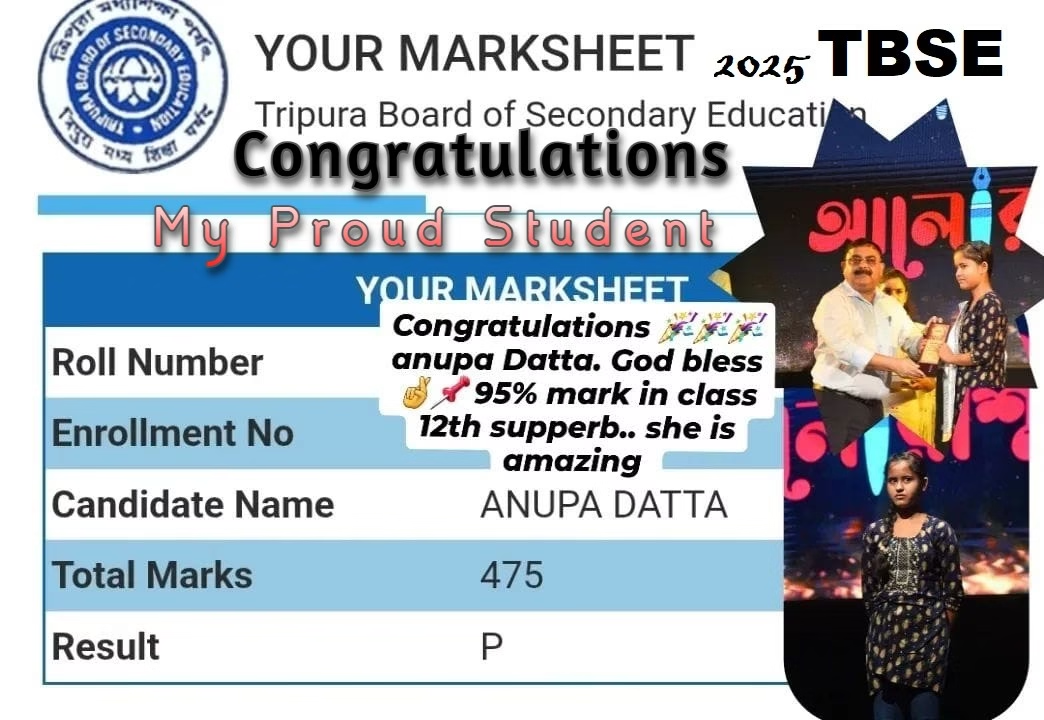
🌟🎉 Anupa Datta Shines Again with 475 Marks in TBSE Class 12 Science 2025 – A True Inspiration! Tbse Board Result 2025 🎉🌟
📅 Published on: April 30, 2025📍 Agartala, Tripura In a world where challenges often dim the brightest lights, Anupa Datta has once again proven that no obstacle is too great when the heart is determined 💪🔥. 🎓 Scoring an incredible 475 out of 500 in the TBSE Class 12 Science Stream 2025, Anupa’s name is…

🚀 bAstronautWay – Your Ultimate Learning Destination! 🎓✨
TBSE CBSE Undergraduate and Postgraduate Entrance Exams 📍 Our Locations: 9863002294 / 7005561197 📚 Courses Offered: ✅ School-Level Coaching (CBSE / TBSE) ✅ School-Level Coaching (ICSE) 🌟 Exclusive Math Training by a World Record Holder! ✅ College-Level Coaching 🎯 Competitive Exam Coaching 🔥 JEE Main & Advanced | TBJEE | NEET | DEEET | CUET…

Car Loan EMI Calculator
🚗 SMART CAR LOAN GUIDE Car Loan EMI Calculator Calculate your monthly EMI, total interest, total repayment and complete loan schedule — before you sign the loan agreement. 🧮 CALCULATE MY EMI ⚠️ SEE HIDDEN COSTS 💡 20/4/10 RULE 🚨 Before you buy the car, calculate the loan. A car may look affordable because the…
How to Become Rich & Successful: Build Skills, Income, Assets & Freedom
💰 THE WEALTH-BUILDING PLAYBOOK How to Become Rich & Successful: Build Skills, Income, Assets & Freedom You don’t need to become rich overnight. You need a system that makes you stronger, more valuable and financially smarter year after year. 🚀 START THE ROADMAP 📊 CALCULATE YOUR WEALTH 🔥 TAKE THE 30-DAY CHALLENGE ⚡ Stop asking…

🔥LIVE STUDENT UPDATE NDA 2 2026 Question Papers & Answer Keys LATEST UPDATE
🔥 NDA 2 2026 • LATEST UPDATE LIVE STUDENT UPDATE NDA 2 2026 Question Papers & Answer Keys All Sets A, B, C & D • Mathematics + GAT • Question Paper Updates • Answer Key • Score Calculator 🚀 CHECK QUESTION PAPERS 📘 CHECK ANSWER KEYS 🧮 CALCULATE YOUR SCORE 📢 Important Update: The…





🌱🌿 Class 6 Science – Diversity in the Living World
📚 In-Text Questions and Answers (Activities 2.2 to 2.9 & Section 2.3)
👨🏫 By Grandmaster Bikram Sutradhar (5-Time World Record Holder) | 🚀 BASTRONAUTWAY
🔍🧠 Activity 2.2: Let Us Appreciate | आओ सराहना करें
1. 👁️ Close your eyes and think of a plant and animal you appreciate.
Answer/उत्तर: 🌹 I think of a rose plant for its flowers and a butterfly for its colorful wings.
🌸 मैं एक गुलाब के पौधे और एक तितली के रंग-बिरंगे पंखों के बारे में सोचता हूँ।
2. 🎨 Draw the plant and animal on the blackboard.
Answer/उत्तर: I will draw a 🌹 rose with red flowers and a 🦋 butterfly with orange wings.
मैं काले बोर्ड पर लाल फूलों वाला गुलाब और नारंगी पंखों वाली तितली बनाऊंगा।
3. 👀 What are your observations from the drawings?
Answer/उत्तर: Plants differ in shape, color 🌿 and animals vary in size, color 🐦.
पौधों के आकार और रंग अलग होते हैं, जानवरों के आकार और रंग भी अलग-अलग होते हैं।
4. 👥 How many different plants/animals did the class draw?
Answer/उत्तर: If 20 students draw, we may see 20 different species like mango, tulsi, crow, fish.
अगर 20 छात्र चित्र बनाते हैं, तो हमें आम, तुलसी, कौवा, मछली जैसे 20 अलग-अलग प्रजातियाँ देखने को मिल सकती हैं।
5. 🌍 Are there more varieties than shown?
Answer/उत्तर: Yes, like cactus in deserts 🌵 and whales in oceans 🐋.
हाँ, जैसे रेगिस्तान में कैक्टस और समुद्र में व्हेल पाई जाती हैं।
6. 🔗 Can you think of more examples of interdependence?
Answer/उत्तर: Yes, bees help flowers grow 🐝🌺, monkeys spread seeds 🐒🌳.
हाँ, मधुमक्खियाँ फूलों को परागित करती हैं और बंदर बीज फैलाते हैं।
🧩📦 Activity 2.3: Let Us Group | आओ वर्गीकरण करें
1. 📚 How would you group books and notebooks?
Answer/उत्तर: By subject. Yes, it helps find them easily.
मैं विषय के अनुसार समूह बनाऊंगा। इससे चीजें जल्दी मिलती हैं।
2. 🖼️ Observe features of plants and animals.
Answer/उत्तर: Plants have soft/hard stems 🌱🌳, animals walk or fly 🐾🕊️.
पौधों में कोमल या कठोर तना होता है, जानवर उड़ते या चलते हैं।
3. 🔍 Recall features listed in Tables 2.1 and 2.2.
Answer/उत्तर: Example – Grass has soft stem, Neem has hard stem.
घास में कोमल तना होता है, नीम में कठोर तना होता है।
4. 🧪 Group by common features.
Answer/उत्तर: Plants with hard stems = shrubs 🌹, flying animals = birds 🐦.
कठोर तने वाले पौधे झाड़ी और उड़ने वाले जानवर पक्षी होते हैं।
5. 👥 Discuss grouping methods.
Answer/उत्तर: I grouped by stem; others used flower color.
मैंने तने के आधार पर समूह बनाया; दूसरों ने फूलों के रंग के आधार पर।
6. 🤔 Why are there different grouping bases?
Answer/उत्तर: Because people focus on different traits.
क्योंकि हर कोई अलग विशेषताओं पर ध्यान देता है।
7. 🎯 What is the importance of grouping?
Answer/उत्तर: It helps in understanding differences and similarities easily.
यह पौधों और जानवरों की समझ को आसान बनाता है।
🌳🪴 Activity 2.4: Let Us Group (by Height & Stem) | पौधों को ऊंचाई व तने से समूहबद्ध करें
1. 📏 Compare plant height.
Answer/उत्तर: Tomato is shorter 🍅, rose is medium 🌹, mango is taller 🥭.
टमाटर छोटा, गुलाब मध्यम और आम का पेड़ ऊँचा होता है।
2. 🌈 Observe stem color and flexibility.
Answer/उत्तर: Tomato = green, soft; Mango = brown, stiff.
टमाटर का तना हरा व कोमल होता है, आम का तना भूरा व कठोर।
3. 🌿 From where do branches arise?
Answer/उत्तर: Rose = near ground, Mango = high up.
गुलाब में शाखाएं नीचे से निकलती हैं, आम में ऊपर से।
4. 📚 Differences among herbs, shrubs, trees?
Answer/उत्तर:
- Herbs: Small, soft stem – e.g., tomato
- Shrubs: Medium, hard stem – e.g., rose
- Trees: Tall, woody stem – e.g., mango
✅ Group by stem & height.
पौधों को तने और ऊंचाई के आधार पर समूहबद्ध किया जा सकता है।
🍃🌾 Activity 2.5: Let Us Compare (Leaves) | पत्तियों की तुलना करें
1. 🍁 Observe different leaves.
Answer/उत्तर: Grass = long 🌿, Hibiscus = broad 🌺.
घास की पत्तियाँ लंबी, गुड़हल की चौड़ी होती हैं।
2. 🕵️♂️ Variation in shape/structure?
Answer/उत्तर: Yes – different shapes and vein patterns.
हाँ, पत्तियों के आकार व शिराओं में अंतर होता है।
3. 🔍 Difference in veins of Fig. 2.4a and 2.4b?
Answer/उत्तर: 2.4a (Hibiscus) = net-like, 2.4b (Banana) = parallel.
2.4a में जालदार शिराएं, 2.4b में समांतर शिराएं हैं।
4. 📊 Can grouping be done by venation?
Answer/उत्तर: Yes – reticulate vs. parallel.
हाँ, शिरा विन्यास के आधार पर पौधों को समूहबद्ध किया जा सकता है।
🌱🌾 Activity 2.6: Let Us Find Out (Roots)
1. 🌿 Similarities and differences in roots?
Answer/उत्तर: All have roots. Mustard = taproot, Grass = fibrous.
सभी में जड़ें होती हैं। सरसों में मुख्य जड़, घास में रेशेदार जड़ें होती हैं।
2. 🌾 Any more grasses?
Answer/उत्तर: Yes – wheat 🌾 has fibrous roots too.
हाँ, गेहूं में भी रेशेदार जड़ें होती हैं।
🧪📊 Activity 2.7: Let Us Relate and Analyse
1. 🌱 Collect 5 saplings.
Answer/उत्तर: Lemongrass, Marigold, Sadabahar, Neem, Wheat.
मैं लेमनग्रास, गेंदा, सदाबहार, नीम, गेहूं के पौधे इकट्ठा करता हूँ।
2. 🔬 Observe roots and venation.
Answer/उत्तर: Lemongrass = parallel + fibrous; Marigold = reticulate + taproot.
लेमनग्रास में समांतर शिराएं और रेशेदार जड़ें होती हैं; गेंदा में जालदार शिराएं और मुख्य जड़ होती है।
3. 📝 Record observations.
Answer/उत्तर: ✔️ See Table 2.4 (previous answer).
4. 🔗 Any relation between venation and roots?
Answer/उत्तर: Yes – reticulate → taproot; parallel → fibrous.
हाँ, जालदार शिराएं = मुख्य जड़; समांतर शिराएं = रेशेदार जड़।
🌱🌽 Activity 2.8: Let Us Compare (Seeds)
1. 🧫 Soak seeds (chickpea, maize).
Answer/उत्तर: I soak and wait for swelling.
मैं चने और मक्का के बीज भिगोकर फूलने देता हूँ।
2. 🔍 Observe cotyledons.
Answer/उत्तर: Chickpea = 2, Maize = 1.
चना = दो बीजपत्र, मक्का = एक बीजपत्र।

3. 🔗 Relation of venation, root, cotyledon?
Answer/उत्तर:
- Dicots: 2 cotyledons + reticulate venation + taproot
- Monocots: 1 cotyledon + parallel venation + fibrous roots
द्विबीजपत्री पौधे – 2 बीजपत्र, जालदार शिराएं, मुख्य जड़।
एकबीजपत्री पौधे – 1 बीजपत्र, समांतर शिराएं, रेशेदार जड़ें।
🐾🐦 Activity 2.9: Let Us Find Out (Animal Movement)
1. 🐾 Movement body parts?
Answer/उत्तर: Legs (goat), Wings (pigeon), Fins (fish).
बकरी – टांगों से, कबूतर – पंखों से, मछली – पंखों से चलती है।
2. 📋 Table 2.5 – record movements
Answer/उत्तर: ✔️ See previous Table 2.5.
3. 📌 Examples:
Answer/उत्तर:
- Ant – walks with legs
- Pigeon – flies with wings
- Fish – swims with fins
4. 🔍 Conclusion from table?
Answer/उत्तर: Animals move differently using different parts.
हर जानवर अलग अंगों से चलता है।
5. 📦 Grouping by movement?
Answer/उत्तर: Flyers (birds), Swimmers (fish), Walkers (goat).
उड़ने वाले, तैरने वाले, चलने वाले जानवरों के समूह बन सकते हैं।
🌎🐫 Section 2.3: Plants & Animals in Different Surroundings
1. 🧭 Does movement depend on surroundings?
Answer/उत्तर: Yes – Fish swim 🐟, Goat walks 🐐.
हाँ, मछली तैरती है, बकरी चलती है – उनके पर्यावरण के अनुसार।
2. 🔍 Observations from different regions?
Answer/उत्तर: Desert = cactus 🌵, camel 🐪; Mountains = pine 🌲, yak 🐂.
रेगिस्तान में कैक्टस और ऊँट; पहाड़ों में देवदार और याक मिलते हैं।
3. ❓ Why biodiversity varies?
Answer/उत्तर: Because of different climates – dry, cold, etc.
क्योंकि हर क्षेत्र की जलवायु अलग होती है।
4. 🐫 Compare desert vs cold desert camel.
Answer/उत्तर:
- Rajasthan camel = long legs, 1 hump
- Ladakh camel = short legs, 2 humps, hairy
Each is adapted to its region.
हर ऊँट अपने क्षेत्र के अनुसार अनुकूलित होता है।
5. 💧 How do camels survive in deserts?
Answer/उत्तर: Camels save water – less urine, dry dung, no sweating.
ऊँट पानी की बचत करता है – कम मूत्र, सूखा मल, पसीना नहीं आता।
✨
📘 Becoming an Astronaut in India (ISRO) – A Complete Guide After Class 12
📘 Becoming an Astronaut in India (ISRO) – A Complete Guide After Class 12 ✍️ Author: GrandMaster Bikram Sutradhar🏛️ Institute: bAstronautWay🚀 5-Time World Record Holder | Best Teacher Awardee 2023 🌠 Dreaming of Space? Here’s How to Become an Astronaut with ISRO With India’s Gaganyaan mission, ISRO is preparing to send Indian astronauts (Vyomanauts) into…
Top 20 Shubh Tracks You MUST Watch on @SHUBHWORLDWIDE 🎧
Top 20 Shubh Tracks You MUST Watch on @SHUBHWORLDWIDE 🎧 📝 Top 20 Shubh Tracks Shubh Tracks Explore the must-hear songs by Punjabi‑Canadian rapper Shubh on his official @SHUBHWORLDWIDE YouTube channel—from “We Rollin” to “Supreme.” View videos, discover behind‑the‑beat facts, and stream the complete playlist here! 🌟 Welcome to the ultimate Shubh experience! Dive into the…
🌟🎉 Anupa Datta Shines Again with 475 Marks in TBSE Class 12 Science 2025 – A True Inspiration! Tbse Board Result 2025 🎉🌟
📅 Published on: April 30, 2025📍 Agartala, Tripura In a world where challenges often dim the brightest lights, Anupa Datta has once again proven that no obstacle is too great when the heart is determined 💪🔥. 🎓 Scoring an incredible 475 out of 500 in the TBSE Class 12 Science Stream 2025, Anupa’s name is…
🚀 bAstronautWay – Your Ultimate Learning Destination! 🎓✨
TBSE CBSE Undergraduate and Postgraduate Entrance Exams 📍 Our Locations: 9863002294 / 7005561197 📚 Courses Offered: ✅ School-Level Coaching (CBSE / TBSE) ✅ School-Level Coaching (ICSE) 🌟 Exclusive Math Training by a World Record Holder! ✅ College-Level Coaching 🎯 Competitive Exam Coaching 🔥 JEE Main & Advanced | TBJEE | NEET | DEEET | CUET…
Car Loan EMI Calculator
🚗 SMART CAR LOAN GUIDE Car Loan EMI Calculator Calculate your monthly EMI, total interest, total repayment and complete loan schedule — before you sign the loan agreement. 🧮 CALCULATE MY EMI ⚠️ SEE HIDDEN COSTS 💡 20/4/10 RULE 🚨 Before you buy the car, calculate the loan. A car may look affordable because the…
How to Become Rich & Successful: Build Skills, Income, Assets & Freedom
💰 THE WEALTH-BUILDING PLAYBOOK How to Become Rich & Successful: Build Skills, Income, Assets & Freedom You don’t need to become rich overnight. You need a system that makes you stronger, more valuable and financially smarter year after year. 🚀 START THE ROADMAP 📊 CALCULATE YOUR WEALTH 🔥 TAKE THE 30-DAY CHALLENGE ⚡ Stop asking…
🔥LIVE STUDENT UPDATE NDA 2 2026 Question Papers & Answer Keys LATEST UPDATE
🔥 NDA 2 2026 • LATEST UPDATE LIVE STUDENT UPDATE NDA 2 2026 Question Papers & Answer Keys All Sets A, B, C & D • Mathematics + GAT • Question Paper Updates • Answer Key • Score Calculator 🚀 CHECK QUESTION PAPERS 📘 CHECK ANSWER KEYS 🧮 CALCULATE YOUR SCORE 📢 Important Update: The…
🧠 Observational Questions (Plant & Animal Habitats)
🌱 Q: Do fish swim with fins and goats walk with legs because of their surroundings?
✅ Answer उत्तर: Yes, fish use fins to swim in water, and goats use legs to walk on land due to their environment.
हाँ, मछलियाँ अपने पंखों से पानी में तैरती हैं और बकरी अपने पैरों से ज़मीन पर चलती है क्योंकि ये उनके पर्यावरण के अनुसार अनुकूलित हैं।
🌍 Q: What are your observations regarding plants and animals found in various regions?
✅ Answer उत्तर: I observed that:
- Deserts 🌵 have cacti and camels 🐫
- Mountains ⛰️ have deodar trees and yaks 🐂
- Oceans 🌊 have fish 🐟
This shows biodiversity varies by region.
रेगिस्तान में कैक्टस और ऊँट, पहाड़ों में देवदार के पेड़ और याक, और समुद्रों में मछलियाँ पाई जाती हैं। इससे पता चलता है कि विभिन्न क्षेत्रों में जैव विविधता अलग होती है।
🌡️ Q: Why is biodiversity different in different regions?
✅ Answer उत्तर: Because every region has different conditions like temperature, water, and soil.
हर क्षेत्र के वातावरण अलग होते हैं, जैसे—रेगिस्तान में सूखापन, पहाड़ों में ठंड—इसलिए जैव विविधता भी अलग होती है।
🐪 Q: What differences do you see between camels of Rajasthan and Ladakh?
✅ Answer उत्तर:
- Rajasthan camels 🐫: Long legs, 1 hump, short hair
- Ladakh camels 🐪: Short legs, 2 humps, thick hair
These features help them survive in sand (Rajasthan) and cold (Ladakh).
राजस्थान के ऊँटों में लंबे पैर, एक कूबड़ और कम बाल होते हैं।
लद्दाख के ऊँटों में छोटे पैर, दो कूबड़ और घने बाल होते हैं। ये उनके पर्यावरण में जीने में मदद करते हैं।
🚱 Q: What features help camels survive in the desert?
✅ Answer उत्तर:
- Less urine
- Dry dung
- Do not sweat much
These save water.
ऊँट कम पेशाब करते हैं, उनका गोबर सूखा होता है और पसीना नहीं बहाते—इससे पानी की बचत होती है।
💔 Q: What happens if a habitat is damaged? Can a goat live without grass? Can fish survive without water?
✅ Answer उत्तर:
- Damaged habitats = loss of food and shelter
- Goat will starve without grass
- Fish will die without water
यदि पर्यावास नष्ट होता है, तो जानवरों और पौधों को भोजन और घर नहीं मिलेगा। बकरी घास के बिना भूखी मरेगी और मछली पानी के बिना जीवित नहीं रह सकती।
🧓 Q: Ask elders about animals or birds they saw in childhood but not now.
✅ Answer उत्तर: Example: They saw many sparrows 🐦, butterflies 🦋 and dragonflies 🪰, but now they are rarely seen due to habitat loss.
पहले बहुत सी गौरैया और तितलियाँ दिखाई देती थीं, लेकिन अब उनकी संख्या बहुत कम हो गई है क्योंकि उनका पर्यावास खत्म हो गया है।
🌱 From Learning Further
🌾 Q: Compare wheat and kidney bean plants in terms of root and leaf venation.
✅ Answer उत्तर:
- Wheat 🌾: Fibrous roots, parallel venation
- Kidney beans 🫘: Taproots, reticulate venation
गेहूं में रेशेदार जड़ें और समांतर शिराविन्यास होता है, जबकि राजमा में नलिका जड़ें और जालाकार शिराविन्यास होता है।
🐠 Q: Group animals by habitat – aquatic, terrestrial, or both.
✅ Answer उत्तर:
- A – Aquatic (जलचर): Dolphin, Whale
- B – Terrestrial (स्थलचर): Horse, Sheep, Squirrel, Earthworm, Pigeon
- C – Both (जल और स्थल): Frog, Crocodile, Tortoise
🥕 Q: What type of root and venation does radish have?
✅ Answer उत्तर: Radish has taproot and reticulate venation in its leaves.
मूली में नलिका (taproot) होती है और इसकी पत्तियों में जालाकार शिराविन्यास (reticulate venation) होता है।
🐐 Q: Differences between a mountain goat and a plain goat?
✅ Answer उत्तर:
- Similarities: Legs, eat grass
- Differences:
- Mountain goat: Thick fur, short legs
- Plain goat: Thin fur, long legs
These adaptations help them live in their specific environments.
पहाड़ी बकरी के पास मोटे बाल और छोटे पैर होते हैं, जबकि मैदानी बकरी के पतले बाल और लंबे पैर होते हैं। यह उनके पर्यावरण के अनुसार अनुकूलन है।
🧬 Q: Group animals based on backbone.
✅ Answer उत्तर:
- With backbone (कशेरुक): Cow, Pigeon, Bat, Tortoise, Whale
- Without backbone (अकशेरुक): Cockroach, Fish, Grasshopper, Lizard
(Note: Fish and lizard actually do have backbones; they should be in “with backbone”. Corrected grouping below)
✔️ Corrected:
- With backbone: Cow, Pigeon, Bat, Tortoise, Whale, Fish, Lizard
- Without backbone: Cockroach, Grasshopper
🌲 Q: How does deforestation affect surroundings? How to stop it?
✅ Answer उत्तर:
- Effect: Loss of biodiversity, fewer animals, less oxygen
- Solution: Plant trees 🌳, support Project Tiger 🐅
वनों की कटाई से जैव विविधता घटती है और ऑक्सीजन कम होती है। हमें पेड़ लगाकर और प्रोजेक्ट टाइगर जैसे अभियानों को समर्थन देकर इसे रोकना चाहिए।
🌿 Q: Find examples for A and B in the flowchart (reticulate vs. parallel venation).
✅ Answer उत्तर:
- A (Reticulate): Hibiscus
- B (Parallel): Grass
A – गुड़हल (जालाकार शिराविन्यास), B – घास (समांतर शिराविन्यास)
🌺 Q: Raj says hibiscus is a shrub. What should Sanjay ask to confirm?
✅ Answer उत्तर:
- Is the stem woody?
- Are the branches near ground?
- Is the height medium?
संजय पूछ सकता है: क्या तना कठोर है? क्या शाखाएँ ज़मीन के पास हैं? क्या यह मध्यम ऊँचाई का है?
🪴 Q: Examples of Group A and B (Dicot vs. Monocot)?
✅ Answer उत्तर:
- Group A (Dicot, Taproot): Hibiscus, Mango
- Group B (Monocot, Fibrous): Grass, Wheat
समूह A: गुड़हल, आम
समूह B: घास, गेहूं
🦆 Q: How are duck’s feet different from a pigeon’s? What activity does it help in?
✅ Answer उत्तर:
Duck has webbed feet 🦆, helpful for swimming. Pigeon has separate toes, for perching.
बत्तख के पैर झिल्लीदार होते हैं, जिससे वह तैर सकती है, जबकि कबूतर के पैर अलग-अलग अंगुलियों वाले होते हैं, जो बैठने में मदद करते हैं।
🌱 Q: Other similarities in Group A (Dicot) and Group B (Monocot)?
✅ Answer उत्तर:
- Group A: Two cotyledons, reticulate venation
- Group B: One cotyledon, parallel venation
समूह A (डायकोट): दो बीजपत्र, जालाकार शिराविन्यास
समूह B (मोनोकोट): एक बीजपत्र, समांतर शिराविन्यास
Written By
Full Stack Developer and 5-Time World Record Holder, Grandmaster Bikram Sutradhar
bAstronautWay
SirBikramSutradhar on YouTube
More Story click the link
ICSE CLASS 10 ICSE CLASS 10 BIOLOGY BASTRONAUTWAY SirBikramSutradhar Bikram Sutradhar GrandMaster Bikram Sutradhar selina biology solutions ICSE Biology Selina Solution
📚 Class 9 Science – Complete Table of Contents (विषय-सूची)
CBSE | NCERT Curriculum | Bilingual (English + Hindi)
By Grandmaster Bikram Sutradhar | SirBikramSutradhar | BASTRONAUTWAY
🔬 PHYSICS (भौतिक विज्ञान)
| 🔢 | Chapter Title (English) | अध्याय का नाम (हिंदी) | Page No. |
| 1️⃣ | Motion | गति | |
| 2️⃣ | Force and Laws of Motion | बल तथा गति के नियम | |
| 3️⃣ | Gravitation | गुरुत्वाकर्षण | |
| 4️⃣ | Work and Energy | कार्य तथा ऊर्जा | |
| 5️⃣ | Sound | ध्वनि |
🧪 CHEMISTRY (रसायन विज्ञान)
| 🔢 | Chapter Title (English) | अध्याय का नाम (हिंदी) | Page No. |
| 1️⃣ | Matter in Our Surroundings | हमारे आस-पास के पदार्थ | |
| 2️⃣ | Is Matter Around Us Pure? | क्या हमारे आस-पास के पदार्थ शुद्ध हैं? | |
| 3️⃣ | Atoms and Molecules | परमाणु एवं अणु | |
| 4️⃣ | Structure of the Atom | परमाणु की संरचना |
🧬 BIOLOGY (जीव विज्ञान)
| 🔢 | Chapter Title (English) | अध्याय का नाम (हिंदी) | Page No. |
| 1️⃣ | The Fundamental Unit of Life | जीवन की मौलिक इकाई | |
| 2️⃣ | Tissues | ऊतक | |
| 3️⃣ | Improvement in Food Resources | धनों में सुधार |
📘 ADDITIONAL SECTIONS (अतिरिक्त अनुभाग)
| 📖 Section | Title (English + Hindi) |
| 🔹 | Glossary / पारिभाषिक शब्दावली |
| 🔹 | Answer Keys / उत्तरमाला |
| 🔹 | Summary / सारांश |
| 🔹 | Important Diagrams / महत्वपूर्ण चित्र |
| 🔹 | NCERT Exercises / एनसीईआरटी अभ्यास |
| 🔹 | Sample Papers & MCQs / मॉडल पेपर व वस्तुनिष्ठ प्रश्न |
✅ All content follows the official NCERT Class 9 Science textbook structure. Each chapter will include explanations, bilingual notes, definitions, diagrams, MCQs, FAQs, and practice exercises under the BASTRONAUTWAY learning system.
class 10 Maths ncert solution.
CBSE Class 10 Mathematics (2025) NCERT Syllabus:
CBSE Class 10 Mathematics NCERT Syllabus (2025) – Chapter-Wise List
CBSE Class 10 Mathematics NCERT Syllabus (2025) – Chapter-Wise List
chapter 4. Quadratic Equations
chapter 5. Arithmetic Progressions
chapter 6. Triangles
chapter 7. Coordinate Geometry
chapter 8. Introduction to Trigonometry
chapter 9. Some Applications of Trigonometry
chapter 11. Areas Related to Circles
chapter 12. Surface Areas and Volumes
CBSE Class 10 Science (2025) NCERT Syllabus:
CBSE Class 10 Science NCERT Syllabus (2025) – Chapter-Wise List
CBSE Class 10 Science NCERT Syllabus (2025) – Chapter-Wise List
Chapter 1 Chemical Reactions and Equations
Chapter 2 Acids, Bases and Salts
Chapter 3 Metals and Non-metals
Chapter 4 Carbon and its Compounds
Chapter 5 Life Processes
Chapter 6 Control and Coordination
Chapter 7 How do Organisms Reproduce?
Chapter 8 Heredity
Chapter 9 Light – Reflection and Refraction
Chapter 10 The Human Eye and the Colourful World
Chapter 11 Electricity
Chapter 12 Magnetic Effects of Electric Current
Chapter 13 Our Environment
📖 Chapter 12 – Organic Chemistry (Selina Textbook)
Table of Contents:
- 12A. Organic Compounds
- 12B. Hydrocarbons: Alkanes
- 12C. Hydrocarbons: Alkenes
- 12D. Hydrocarbons: Alkynes
- 12E. Alcohols
- 12F. Carboxylic Acids
- Exercise 12 MISCELLANEOUS
- Glossary
- Model Question Paper –
📌 Exercise 12 MISCELLANEOUS – Focus Areas:
- 🧬 Consolidated practice from the entire Organic Chemistry chapter
- 🧪 Application-based questions covering alkanes, alkenes, alkynes, alcohols, and carboxylic acids
- 🧾 Writing structural formulas and chemical equations
- 💡 Distinguishing reactions, isomer identification, and conversions
- 📘 Full-syllabus revision to boost conceptual clarity and board exam readiness
Each question in this section is designed to:
- ✅ Strengthen cross-topic understanding
- 📝 Prepare students for application-based and reasoning-based questions
- 🧠 Improve problem-solving speed and exam performance
class 5